National Revitalization Zone Act Investigative Office
DOC-NB-FASHION-FIELD
What People Wear
A field guide to fashion in Central Concord.
Filed by Agent M. Observations from nine months embedded.
Agent M's Field Note
Nine months in. I can read a block before I step onto it. Not from the faces, from the clothes. What someone wears in this city is a filing system. Economic tier, sector affiliation, how many years they've been here, what they owe and to who. I started keeping notes. This is what I know.
The Three Gears
Fashion in Central Concord operates at one of three levels. Most people live in Gear One or Two. Gear Three is the minority, but it's the visible minority, the people you notice, the ones who define the visual culture. The mistake is assuming everyone looks like Gear Three. The reality is the plain dark jacket.
Gear One
Functional
You wear clothes because you need clothes. No statement, no expression, just coverage and comfort. This is most people most of the time. Buying groceries, commuting, working. The baseline.
01
Gear Two
A Bit Expressive
You make choices. A color you like. A jacket that fits well. Metallic ink over your antenna traces because you think it looks good. You care about how you look, it's just not your whole identity.
02
Gear Three
Really Expressive
Fashion is performance, identity, art. LED integration, color-shifting fabric, coordinated augment styling, full DJ idol aesthetic. The visible minority, they define the visual culture even though they're outnumbered ten to one by people in plain dark jackets.
03
By District & Economic Tier
Fashion in Central Concord isn't organized by named style movements or designer schools. It's organized by economics, geography, and what you need your clothes to do. The categories below are descriptive, not prescriptive, real people mix and blend across all of them.
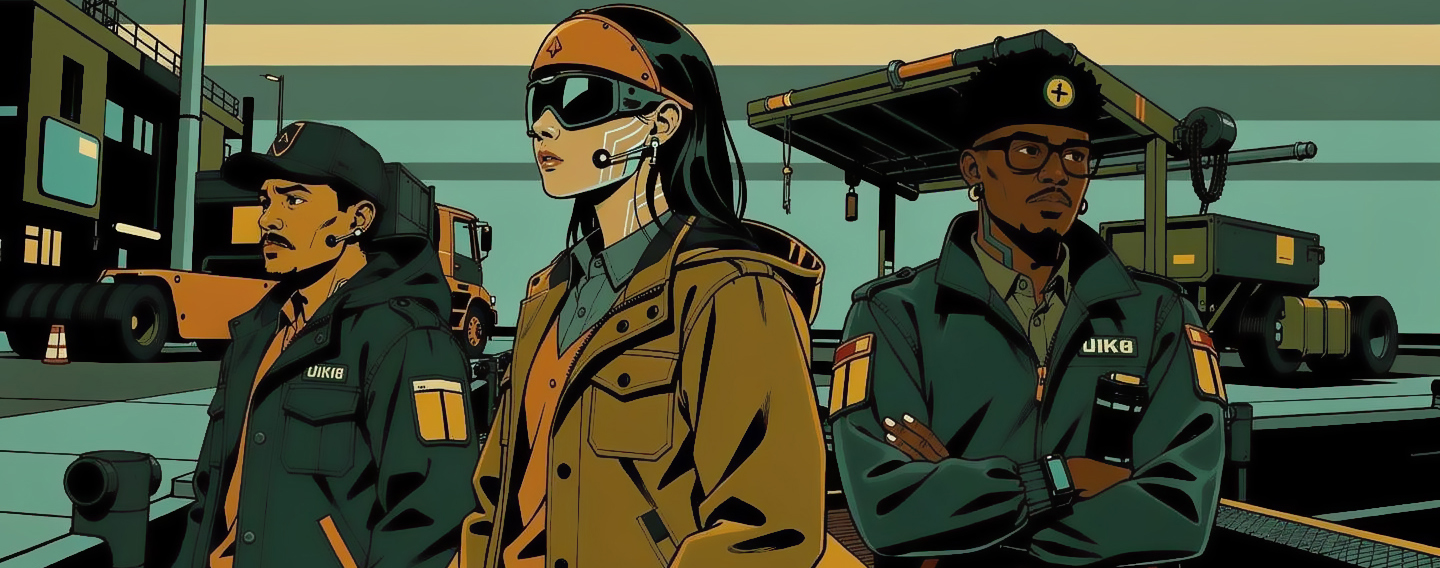
Bayport · Dock 14 · Tidewall Maintenance
Working Class / Industrial
Color
Whatever doesn't show salt stains. Muted tones dominate not by rule but by logic, dark colors survive the work. Faded by washing, sun-bleached unevenly. Personal color shows up in small ways: a favorite shirt worn under the jacket, a patch in a brighter hue. Nobody tells you what to wear. The job does.
The clothes of people who work with their hands in a coastal city with salt air, humidity, and red rain. Dark, muted, practical. Colors that don't show grime or salt stains. Faded from washing, bleached unevenly from sun.
Key Pieces
Field jacket, four-pocket, military surplus or civilian copy, contrast collar
Bomber jacket, short, warm, won't catch on machinery
Cargo pants with reinforced knees and actual pockets
Work boots, steel-toed or composite, resoled at least once
Heavy canvas or treated cotton that survives salt air
Augments
Visible and undecorated. Surface-mounted antenna traces catching light. Data jack housing with wear marks from daily use. Neural port with manufacturer stamp visible when the collar's down. Nobody is styling their chrome here. The chrome is a tool, same as the boots.
Brands & Logos
Employer logos are common, coveralls, jacket patches, hard hats. K-M transit workers have branded gear. Dock 14 union members have union patches. The brands aren't aspirational. They're identification.
Agent M
Cal Rowe's field jacket lives here. Olive drab. Four pockets. Goes everywhere, says nothing. That's the point.
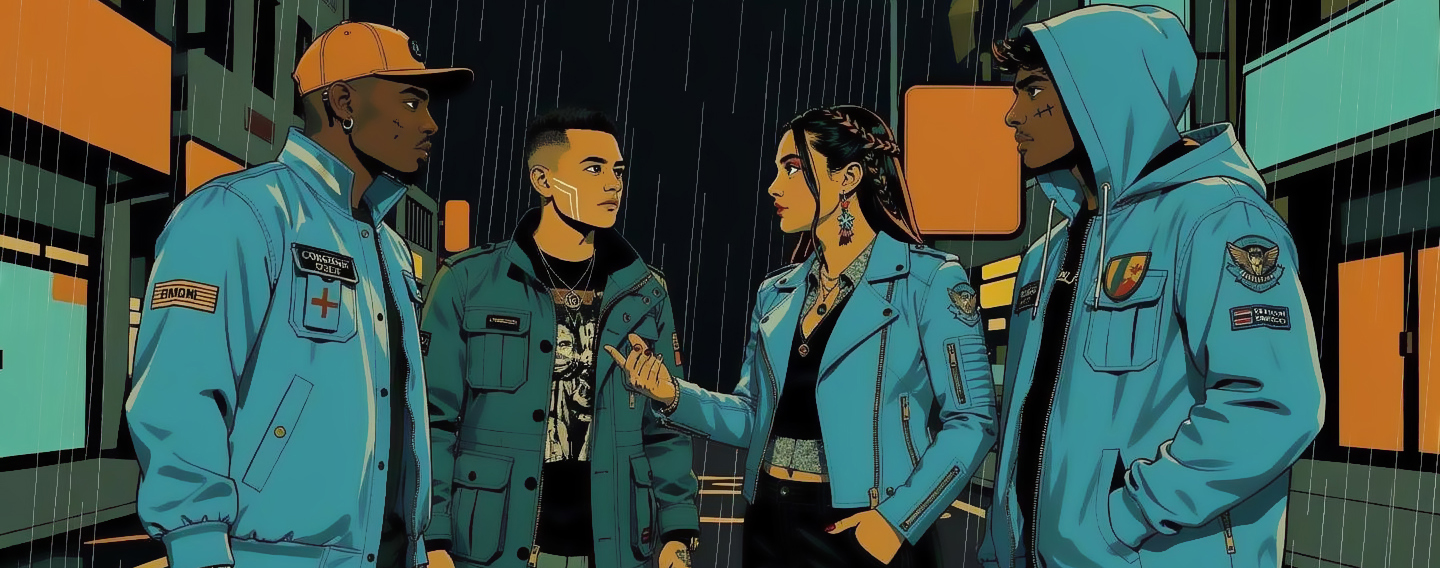
Bayport Margins · Concord East · Five Lamp
Street / Gang Territory
Color
The crew color is fixed, that specific red, that specific green, whatever the set chose. Everything else is personal. Under the crew jacket somebody's wearing whatever they grew up wearing, whatever they like, whatever they found. The unifying element isn't a color scheme. It's the one shared signifier worn deliberately on top of everything else.
Clothing as identity, territory, and threat. Crew colors are real, a specific hue chosen to be visible from a distance. Everything else is personal. Subtlety is not the point.
Key Pieces
The crew jacket, most important garment in gang territory, whatever the cut
Colors: matching, deliberate, visible from a block away
Patches, hand-sewn, painted, or professionally applied crew insignia
LED strips in seams for nighttime recognition
Band and DJ merch layered under crew colors
Augments
Augments are displayed, painted, decorated. A prosthetic hand in crew colors. Antenna traces with metallic tattoo ink. Custom neural port housings, hand-engraved, painted, sometimes with small LED accents. Your chrome is part of your colors. You don't hide it. You brand it.
Brands & Logos
Band and DJ merch mixed with crew identity. A Corner Lord in a shirt from a DJ who plays their turf. Five Lamp members in limited-run event shirts from shows they attended. The merch says where you go and who you know.
Agent M
No single gang aesthetic. Central Concord gangs are multicultural, not every crew jacket is a Japanese biker moto. Some are bombers, some are hoodies, some are field jackets with patches. The signifier is crew identity, not garment style. The quality of the jacket tells you the health of the operation.
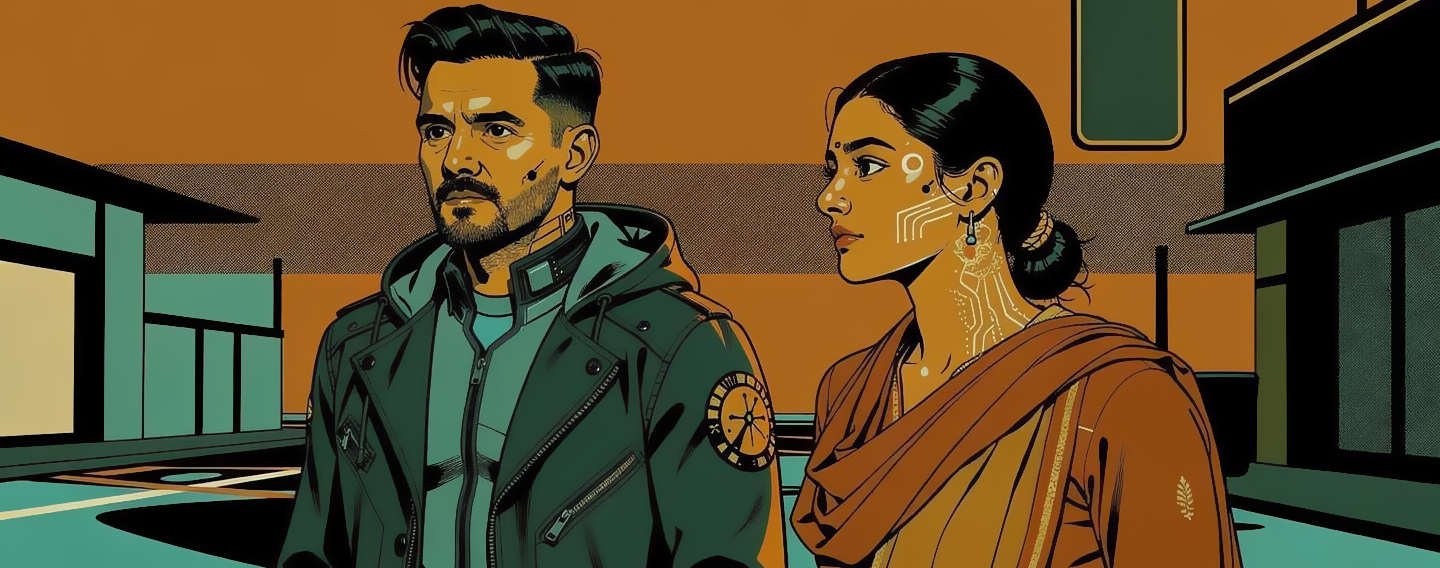
Indira Sector · Mezzanine · Working Professionals
Mid-Range / Professional
Color
Darker tones are common because they read as professional without trying, but there's no rule. Somebody in a deep burgundy blazer looks the part as much as somebody in charcoal. Indira Sector adds warmer earth tones, cultural color traditions, colors that come from somewhere specific. The goal is to look intentional, not to wear any particular color.
The clothes of people who commute, sit at desks, visit clients, and need to look like they have their life together without spending what they don't have. Intentional colors, nothing that screams.
Key Pieces
Structured dark blazer or fitted jacket, the workhorse
Slim technical trousers that don't wrinkle on the commute
The glossy PVC raincoat, fashion-functional crossover, red rain solution
Dark street boots, strap closure, practical but chosen
Fitted high-collar shirt that minimizes augment visibility
Augments
Managed. Not hidden, you can't hide them, but controlled. Antenna traces minimized under high collars or sleeves. Neural port flush or nearly flush. The goal is to not have your hardware be the first thing someone notices.
Brands & Logos
Mid-tier brands that turn over fast. The glossy PVC raincoat as a shared signifier. Some techwear-adjacent pieces without going full Neon Han. The professional aesthetic borrows from Atlas Heights without being able to afford Atlas Heights.
Agent M
Indira Sector adds warmth and textile tradition that the other districts don't have, henna-inspired antenna tattoo patterns, cultural clothing mixed with Central Concord standard. The sector looks like color, but different from Neon Han. Earthier. More textile and less LED.
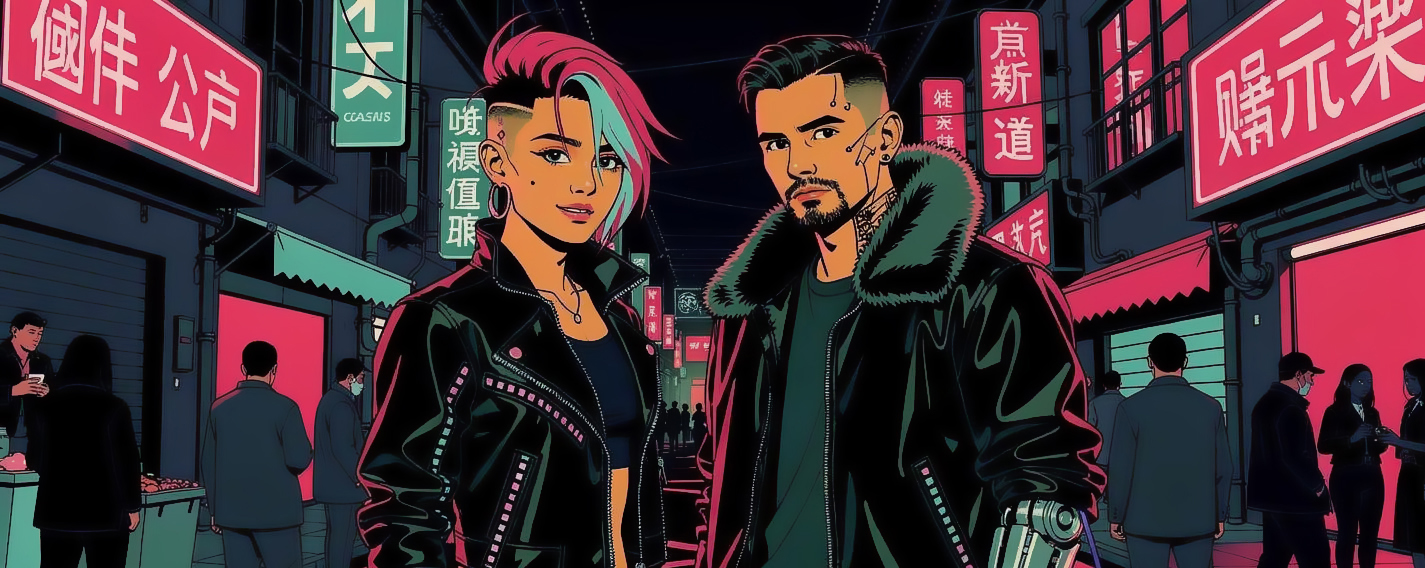
Neon Han · Club Venues · DJ Scene
Nightlife / Neon Han
Color
Whatever is loudest. UV reactive. LED-lit. Color-shifting. Neon Han at night is every color simultaneously and the point is that you're adding to it, not matching it. Somebody in deep violet LED strips is standing next to somebody in acid yellow vinyl. Both are correct. The only wrong answer is invisible.
Color and light. Neon signage, LED clothing, UV-reactive accessories, glossy surfaces reflecting everything. The full LED look. The 80s at maximum volume. This is where Gear Three lives.
Key Pieces
LED-integrated jacket, cheap strip kit to premium fabric-woven electroluminescent thread
Color-shifting fabric that responds to body temp or biometric data
Synthetic fur and vinyl, texture contrast over slick materials
Platform boots with thick sole, strap closure, sometimes LED elements
DJ and event-specific merch, the social passport of the scene
Augments
There is no line between your clothes and your chrome here. Your LED jacket talks to your metallic antenna tattoos. Your color-shifting fabric responds to the same biometric data your commlink reads. Mismatched eyes are a look. Chrome-plated prosthetic hands are accessories. The outfit and the augments are one canvas.
Brands & Logos
DJ merch is dominant. Event-specific shirts, limited-run logos, venue patches. Wearing merch from a particular DJ or event series signals which scene you belong to, a blue lane underground DJ's shirt means something different from an Atlas Heights rooftop residency logo.
Agent M
The decay becomes part of the look. Half-lit LEDs and glitching color-shift aren't failure, they're patina. Nobody in Neon Han throws a broken LED jacket away. They wear it broken. Fashion innovation happens in the back rooms of Neon Han, where someone saw a DJ's jacket and figured out how to make it for a tenth of the price.
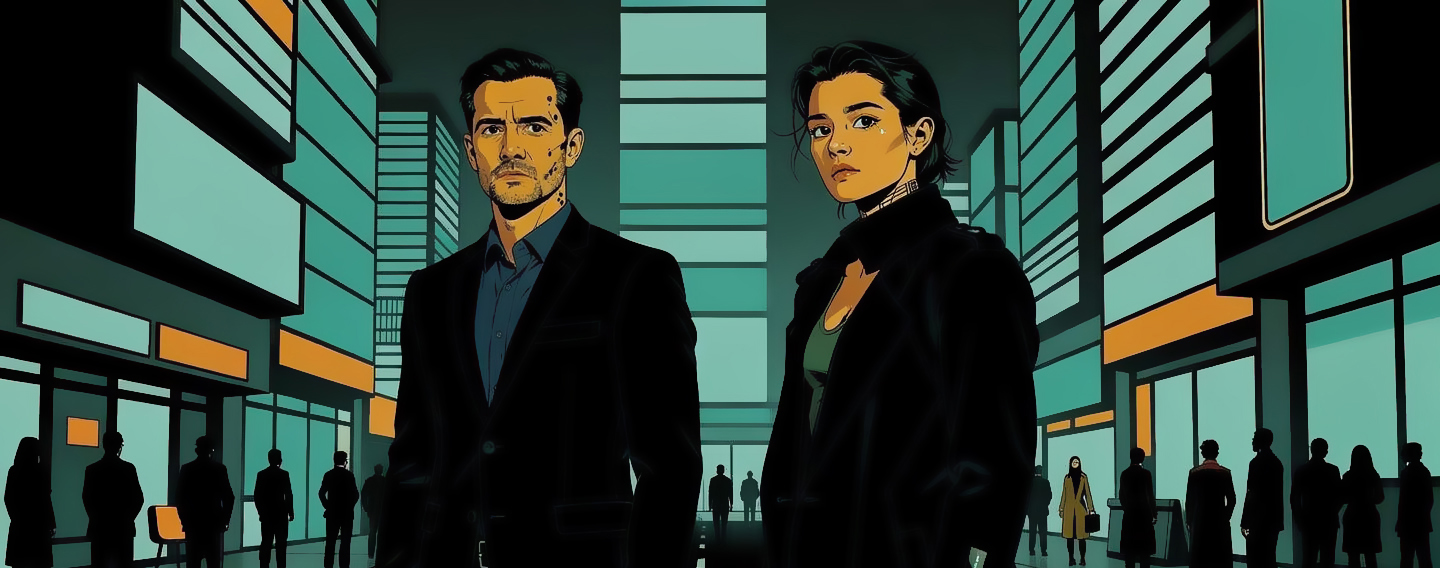
Atlas Heights · Mezzanine Executive · Corporate Events
Corporate / Atlas Heights
Color
Control over color, not absence of it. A red blazer is a power move. An off-white linen suit is a statement. The palette isn't dark by requirement, it's dark by default because dark reads as controlled. When Atlas Heights wears color it's precise and intentional, never accidental. The money shows in the quality of the garment, not the presence or absence of any particular hue.
Two modes, both about control. Corporate Sharp: tailored, structured, clean lines, dark neutrals or precise color. Or Corporate Quiet: draped, monastic, expensive understatement. Both modes avoid anything that looks like an accident.
Key Pieces
Structured blazer in dark or statement color, every line intentional
Slim-cut technical trousers, nothing wrinkles, nothing stains
Long architectural coat for the weather, dark and clean
Dress shoes and heels, 'I don't walk through puddles'
Or: draped linen and quiet fabric with nothing to prove
Augments
Minimized and managed at the premium level. Fine subdermal antenna traces, nearly invisible. Neural port recessed under synth-derm membrane. The hardware exists, you can't be in this city without it, but it costs money to make it disappear, and Atlas Heights has money.
Brands & Logos
Premium labels that don't need logos. The quality speaks. Sold in Atlas Heights boutiques. These brands market through DJ sponsorships and idol culture rather than visible branding, you see the silhouette on a DJ and you know. You don't see the label.
Agent M
Real leather exists here as a quiet luxury. An Atlas Heights coat that ages beautifully costs more than a Bayport worker's monthly rent. The money is in the construction, not the label. Nobody in Atlas Heights needs to tell you they can afford it.
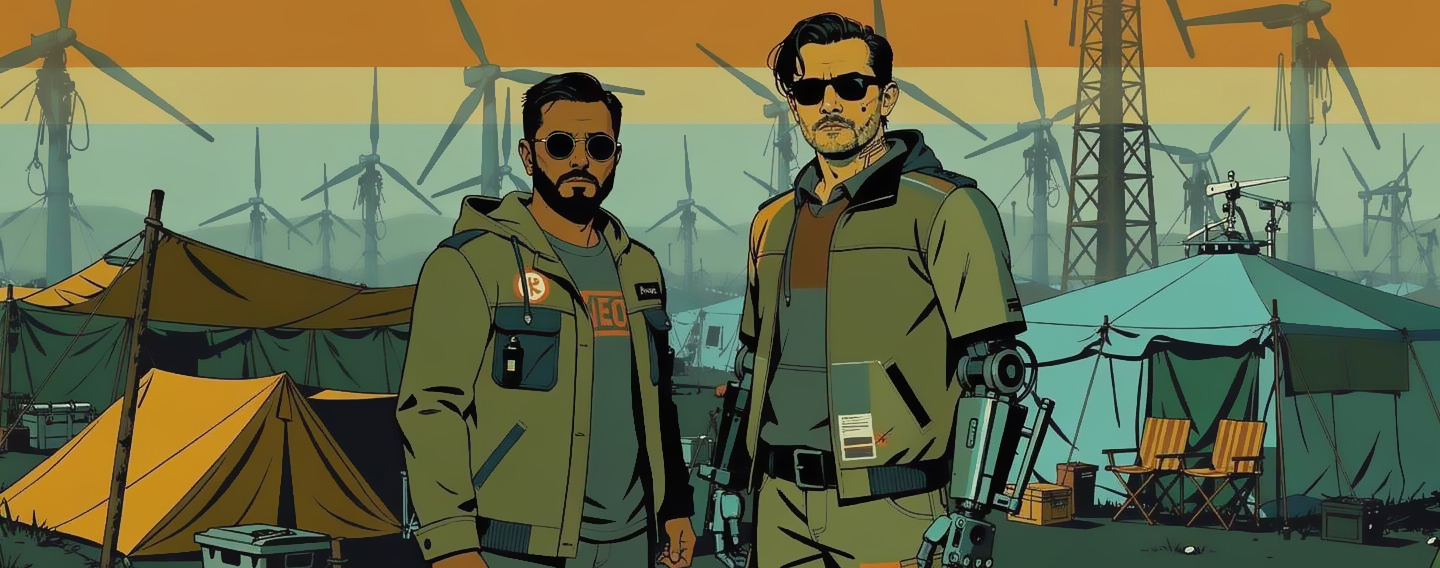
Beyond the City Limits
Outmarch
Color
Sun-bleached, faded, whatever it was before the Outmarch got to it. Color out here is accidental, a jacket that used to be bright red and is now a dull rust. Or it's deliberate in a different way: a defaced corporate logo repainted in something personal. Color as reclamation rather than expression.
Patchwork. Every garment assembled from parts. Colors faded by sun and salt. Corporate branding defaced or removed. Everything repaired. Nothing matches. The absence of branding, in a city saturated with it, is itself a signal.
Key Pieces
Military surplus with logos removed or defaced
Patched and re-patched field jackets, repair history visible
Practical boots resoled multiple times
Anti-brand: crossed-out Netsurge logos, painted-over MegaMart shirts
Salvaged, mismatched, chosen for function not aesthetics
Augments
Visibly maintained by hand. Solder marks. Adhesive patches. Replacement parts that don't match the original housing. No premium clinic maintenance out here, you fix your own chrome or you find someone who can. The augment quality tells you how long someone has been in the Outmarch.
Brands & Logos
Anti-brand is the brand. Removing, defacing, or inverting corporate logos. A crossed-out Netsurge logo is a political statement. The absence of branding, in a city built on visibility, is a signal as loud as any LED jacket.
Agent M
I asked someone out there why they defaced their jacket. He said: 'Because I paid for it, not them.' Real leather exists in the Outmarch too, usually traded through multiple owners, original owner probably dead. It has character. So does everything else out there.
Field Rules
Things that hold true across the whole city, regardless of district or tier.
Laces are a choice.
Straps, buckles, snap closures, velcro, that's the default. Laces get wet, rot in salt air, catch on things. If someone's wearing laced boots, they chose to. That's a statement.
Bulky is correct.
Oversized jackets, chunky boots, layered garments, big collars, padded shoulders. The silhouette is generous, not slim. When your body has metal in it, clothes that drape and layer feel better than things that cling.
The 80s never ended.
Bomber jackets, synthetic materials, bold silhouettes. The 1980s are the aesthetic spine of this city. Not costume, the actual 80s, the real clothes real people wore, pushed forward forty years.
Synthetics dominate.
Natural fibers are expensive. Cotton, wool, real leather, luxury or import. The working and middle class wears synthetic by default. This isn't a downgrade. Forty years of polymer science produced synthetics that outperform naturals in salt air and red rain.
The chrome is part of the outfit.
Some clothing frames hardware. Some tries to minimize it. Most ignores it. But the hardware is there, antenna traces, data jack, neural port. The clothes go over it. Life goes on.
Nothing stays new.
LED strips burn out. Color-shifting fabric degrades. Synthetic leather cracks. Augment housing wears. In some districts that's failure. In others it's character. The difference is which district you're in.
"What you wear in this city is a filing system.", Agent M
Back to Explore