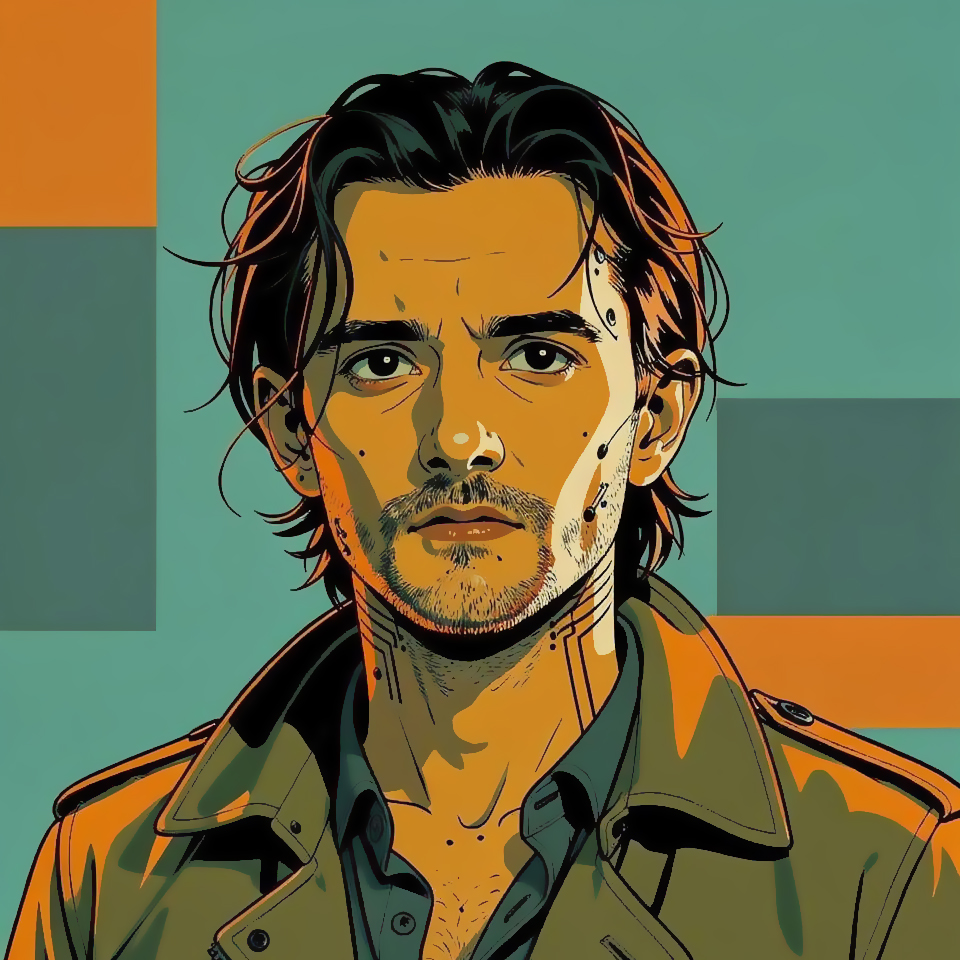
C. Rowe, Private Investigator. Neon Han.PI-2041-04
Playable expansion
In production // Ships with Act I
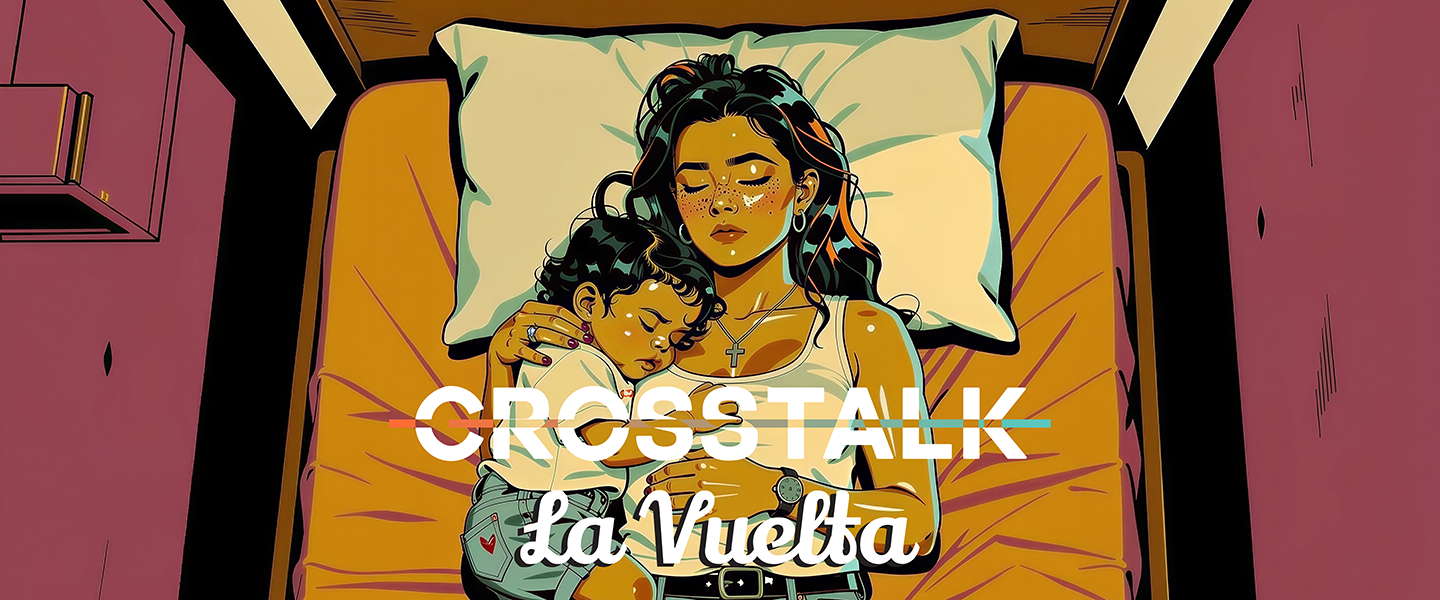
La Vuelta
A young mother hires Cal to find her missing partner in the neighborhood she left fifteen years ago.
The Case
The client's common-law partner left their apartment outside Lake City sometime in the night. She woke at her usual time. The coffee was still in the pot. He was not in the bed. He was not in the house.
He had withdrawn two hundred credits from the bank near his job site the previous evening. He had left his phone charging on the kitchen counter. The only thing on the kitchen table was a receipt for a one-way bus ticket. Three-forty AM departure. Direct to Nuevo Bay.
The bus company would not release passenger information to her. They told her she was not legally family. She and her partner had been together six years and had a child. They had never married. He had told her, repeatedly, that paper does not make anything more real.
She drove down with her daughter in the back seat. She did not know the city. She knew one neighborhood in it: La Palanca, where she was born and where she had not been in fifteen years. Her family had taken her out as a child. The reasons were never explained to her. She had a feeling about where her partner had gone, and the feeling turned out to be correct.
She came to me because the bus company would not talk to her, and I could pull the manifest. She paid in food. The case closed in a week.
Subjects
The client and the investigator of record. Filed for the file.
01
Client
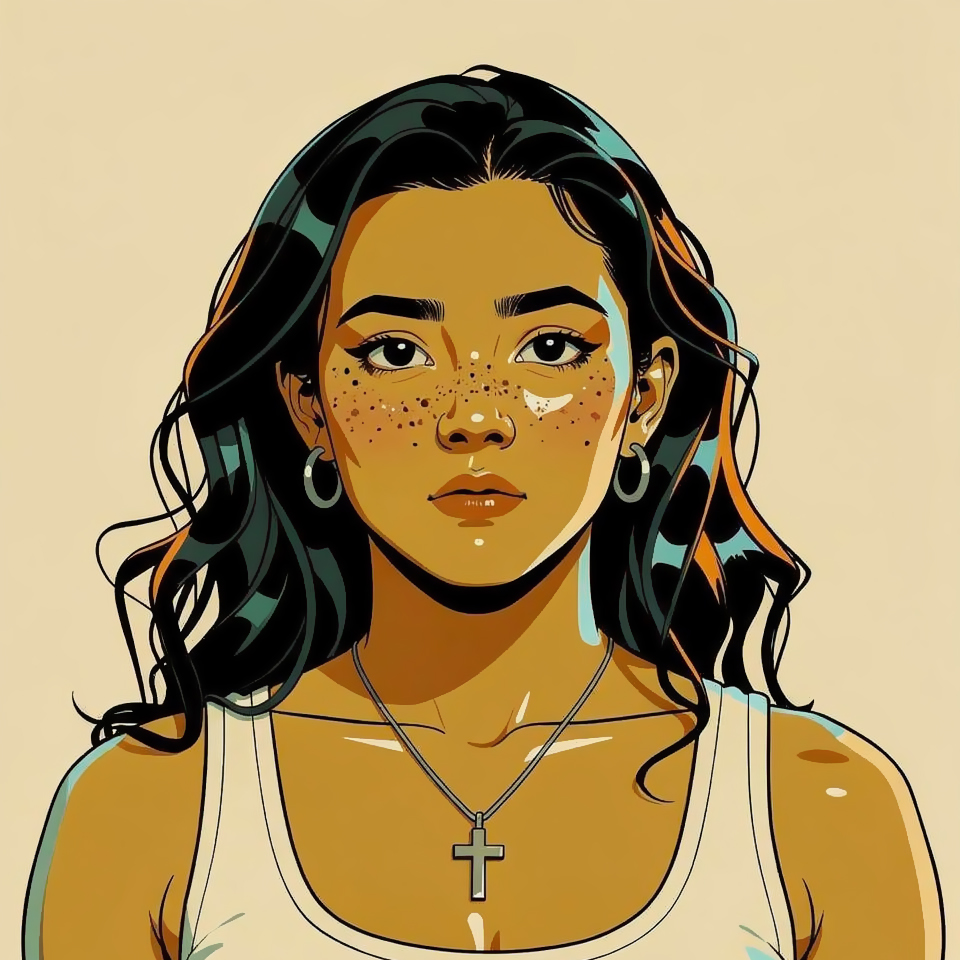
Daniela Delgado
Late twenties. Born in La Palanca, raised outside Lake City. Common-law partner of six years. Mother of one. Drove to Nuevo Bay alone, with her daughter in the back seat, after waking up to a missing partner and a bus receipt on the kitchen table. She has not been back to La Palanca in fifteen years.
Rowe
Came in carrying the kid and the ticket. Most clients sit down because the chair is there. She sat down because she had already decided I was going to help her. I took the case.
02
Investigator
Cal Rowe
Private investigator, licensed, Neon Han office. Works off a debt to a fixer named Rook. Prefers paper records. Has worked the upper Mezzanine for three years and the lower platforms for none. Does not know La Palanca and said so when she asked.
Rowe
She paid me in food. The food was better than what I had been eating. That's what I told her. It was true. It was not the whole reason.
The Neighborhood
On the platforms
La Palanca occupies the lower western platforms of the S4 Mezzanine. Two generations of residents, sometimes three. The neighborhood was built by the transit labor that built the platforms themselves, in the years when the corporate signage above was still being negotiated and the lower levels were considered worthless. The corporate signage was eventually negotiated. The lower levels were eventually considered worth something. The neighborhood remained.
The morning market opens before sunrise. Vendors set up tarps and folding tables on a wide platform that overhangs the next level down. Fish counters. Fruit stalls. Coffee urns the size of car batteries. By eight in the morning the market is packing up. By nine you would not know it had been there.
The catwalks above and between residential blocks are lined with small shrines. Wall niches. Junction boxes converted to altars. Some of the shrines have been maintained for so long that the candle wax has built into stalactites under the grating. The altars are communal. They do not belong to the families who started them. They belong to the row.
The neighborhood remembers everyone. The client's family had lived there. She had been away long enough that she did not know who was still alive when she returned. She found out at the fruit stand on the first morning.
Las Tres Rosas
Las Tres Rosas is the de facto authority in La Palanca. Outsiders would call them a syndicate. The neighborhood calls them an order. Both readings hold. They maintain the altars on the row. They mediate between residents and the corporate platforms above. They settle disputes the corporate platforms refuse to settle. They are the reason the neighborhood is still standing.
Their faith is syncretic. Folk Catholicism, Santa Muerte devotion, Santería. The veladores wear blue and white during ritual work, the colors of the orisha Yemayá, who they take as the protector of women, mothers, and children. The protection is their work. The colors are the announcement of the work.
Three roses, left at a door, mean something specific. Red, white, and gold. Love, purification, justice. The color combination determines whether it is a blessing or a warning. They do not warn twice.
Most of their work is what you see: altar maintenance, neighborhood security, mediation. Some of it is not. I was not in a position to describe what was not, and the client would not have wanted me to try.
They have a custom I respected because it was asked of me. Commlinks go to Low Power before you enter the chapel. I do not know exactly what the order does inside the chapel that requires a quiet signal layer. I know that I was expected to keep mine quiet too. I did.
They are led by a woman whose name does not appear in any file. The neighborhood calls her the Madrina. She is no older than the client. A council of the senior veladores sits with her. The role passed to her from the Madrina before her, who was a friend of the client's mother. That mattered. Not enough to change what happened. Enough to make the conversation possible.
The neighborhood has a code older than the platforms. I do not agree with all of it. I was a guest there. The client was not. Whatever I thought about the code was not the point.
On the Work
The client asked the questions. I stood half a step behind her. People answered her because she was one of theirs. My license didn't come into it. My usefulness was external. Bus manifests, public records, the kind of phone trace her common-law status prevented her from pulling herself. Inside the neighborhood, I was a man in a coat.
I have closed dozens of cases in this city. Most of them are about money. Some are about sex. A few are about pride. Almost none of them are about what this one was about.
The subject had been in the city for several days before he was no longer in the city. He had moved between three locations. He had spoken to four people I was able to identify. He had bought a fish he did not know how to cook and asked for help cooking it. He had left a bag at a lodging house and said he would be back for it.
I do not include the details in this file. The client read the final version and asked me to leave them out. I respect the request. I will say this much: people do not always leave for the reasons their partners imagine. Sometimes the reasons are smaller. Sometimes they are larger. This was larger.
Closing
The case closed in a week. The client paid what she had paid. I learned what I had to learn. She made her decision and I was present for it. Whether I had earned the right to be in the room when she made it is a question I have continued to think about since.
I have been a PI for three years. I have closed cases that ended with people in jail and cases that ended with money recovered and cases that ended with insurance claims honored. I had not, until this one, understood that a case can be closed and the cost can still be running.
The file is closed. The client is whoever she is now. The kid will grow up. The neighborhood is still there. I drive back to Neon Han at the end of the week and the night markets look the way they always look from my window.
Further Reading
La Vuelta is a short side chapter of Crosstalk, set in the same city as the main game. Free for early supporters and demo players, $5 after the full game releases.

 01